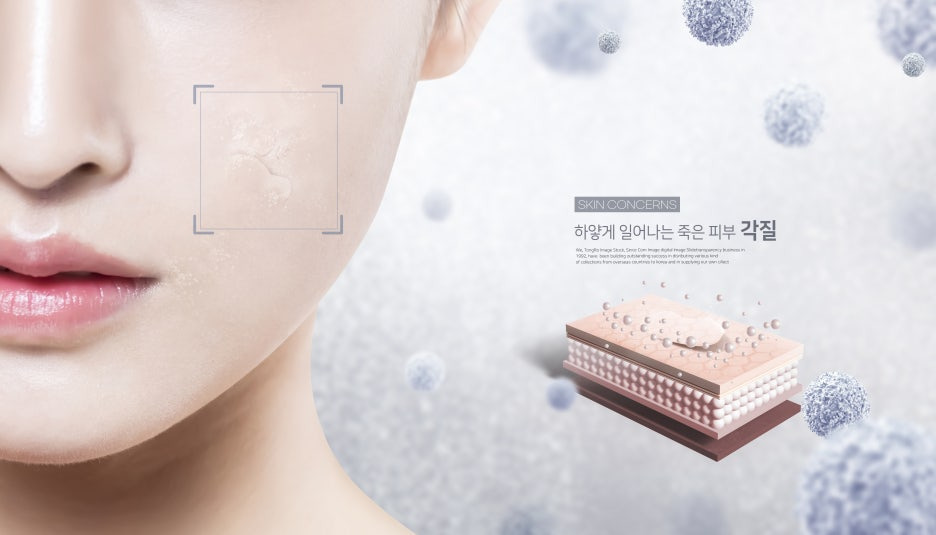
When your skin feels rough and flaky, it’s easy to think, “Do I just need to exfoliate more?”
But when exfoliation becomes too frequent or too harsh, the skin barrier can weaken even further, which often leads to even more dryness and repeated flaking.
That’s why, when dead skin buildup becomes noticeable, the real focus should not be on removing it again and again. What matters more is building a hydration routine that replenishes moisture, helps it stay in the skin, and protects the barrier afterward.
After exfoliation, the layer of dead skin sitting on the surface is removed, which leaves the underlying skin more exposed. In that state, moisture escapes more easily, and the skin can quickly feel tighter, rougher, and drier than before.
This is why a proper hydration routine matters so much on days when flaking is severe. The goal is to support the skin in three steps: replenish moisture, hold onto it, and seal it in before the skin becomes dry again.

The first step is to replenish moisture immediately after cleansing or exfoliation. Because skin tends to be more sensitive right after exfoliating, it’s better to avoid harsh cleansers or toners with a high alcohol content. Instead, use a gentle toner or mist with a high water content to quickly give the skin hydration while it’s still slightly damp. This helps reduce the feeling of tightness and makes the next skincare step absorb more comfortably.
The second step is to layer a hydrating essence or serum that helps the skin retain the moisture you just added. Ingredients like hyaluronic acid, ceramides, and panthenol are especially helpful at this stage because they support both hydration and barrier care. After applying the serum evenly, gently press it into the skin with your palms rather than rubbing it in too aggressively.
The final step is sealing in that moisture with a cream. When skin is flaky, water tends to evaporate quickly, so the cream step becomes even more important. If your skin is oily, a lightweight gel-cream is usually enough to lock in hydration without feeling heavy. If your skin is dry, you may need a richer cream or even a small amount of facial oil on top to help prevent moisture loss.
On days when your skin feels especially rough, tight, and flaky, it can help to finish your routine with Lon.G Pink Apple Pure Cream after toner and essence.
This cream is designed to provide long-lasting hydration support for up to 48 hours, which makes it especially useful when skin feels dry again soon after skincare. It also contains ingredients like hyaluronic acid, apple water, and plant-derived collagen to help keep the skin feeling hydrated and smoother for longer.
Because it has a lightweight gel-cream texture, it works well for skin that feels flaky but also gets oily or easily congested. Instead of feeling heavy, it helps create a smoother, more comfortable finish while supporting the skin barrier.

When skin is flaking badly, it often means the barrier is weakened and struggling to hold onto moisture. In that case, the most helpful ingredients are usually the ones that focus on hydration and barrier support.
Using products with these kinds of ingredients in multiple lightweight layers often works better than trying to fix flaking with one very heavy product.
If your skin is dry, it’s usually best not to exfoliate too often. Once a week is often enough, and afterward it helps to use a cream generously and, if needed, add a light oil on top to prevent moisture loss.
If your skin is oily, it’s better to keep exfoliation focused on the T-zone and use a lightweight hydrating cream on the rest of the face. In this case, a gel-cream texture with ingredients like hyaluronic acid is usually more comfortable than a rich cream.
If your skin is sensitive, exfoliation should be kept very gentle and infrequent. Enzyme cleansers or low-irritation exfoliating pads used once a week or less are often a safer choice. After that, it’s best to keep the routine simple and focus mainly on hydrating, barrier-supportive products.

When the skin barrier is already compromised, a few common habits can make the problem worse.
Leaving the skin bare for too long after exfoliation can quickly increase dryness because moisture evaporates almost immediately. It’s better to move straight into toner, serum, and cream while the skin is still comfortable.
Applying skincare and then not giving it time to settle can also reduce comfort. After applying each step, gently pressing the product into the skin with your palms can help improve absorption and reduce surface dryness.
Using too many thick layers at once can also backfire, especially if your skin is oily or easily congested. Over-layering can make skin feel greasy while still not truly addressing dehydration underneath.
When flaking gets severe, the answer usually isn’t “more exfoliation.”
The better approach is to focus on restoring hydration and protecting the skin barrier so the skin can recover on its own.
When you shift the goal from simply removing flakes to actually replenishing moisture and keeping it in, your skin is much more likely to feel soft, calm, and healthy again.
✨ Smoother skin starts with moisture that stays—not exfoliation that strips.